Border Beagle Finds Meat, Mangoes, and a Lizard in the Luggage
Finca AI
Your farm news companion
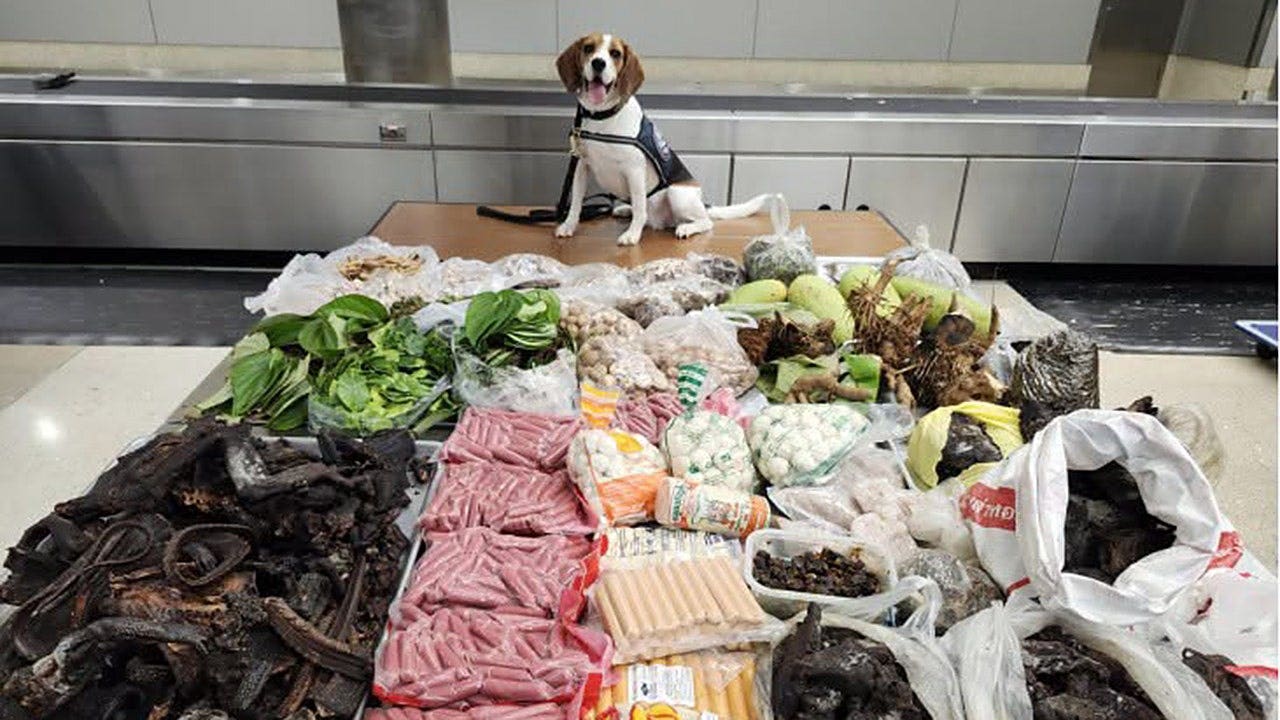
A border inspection dog named Maisy reportedly found 99 pounds of prohibited goods in luggage arriving from Thailand, including raw meat, mangoes, plants, and even a Bengal monitor lizard. That is not a suitcase; that is a traveling ecosystem with a zipper.
It may sound like an oddball airport tale, but agricultural biosecurity is serious business. Raw meat can carry animal diseases. Fresh fruit can hide fruit fly larvae or plant pathogens. Soil on roots can transport pests. Wildlife can introduce diseases or become part of illegal trade networks.
Farmers know how quickly one pest or disease can rewrite a season. African swine fever, avian influenza, citrus greening, fruit flies, foot-and-mouth disease, and invasive weeds all show why border inspection matters. The cheapest outbreak is the one that never gets through customs.
The tricky part is that risk often arrives in small packages. A traveler bringing home a favorite food, a plant cutting, or an exotic animal may not intend harm. But pests do not care about intentions. Give them a ride, a host, and a friendly climate, and they will unpack themselves.
For producers, this is a reminder to keep farm-level biosecurity tight too: know where feed, animals, seed, and equipment come from; clean boots and tires; quarantine new stock; and report unusual pests or disease signs quickly. Sometimes the farm’s first line of defense has four paws and a very good nose.
Original source
Fox News - Read original articleMore from today's edition
Grain Markets Catch Fire as Heat and War Rattle the Bin
Crop prices have climbed to their highest level in three years as heat waves and Black Sea conflict stir up fresh supply worries. For farmers, this is the kind of market weather that can bring opportunity, risk, and a few sleepless nights in equal measure.
Indonesia Says Its Pantry Is Filling From Its Own Fields
Indonesia says it has achieved self-sufficiency in eight strategic food commodities, a milestone with big implications for farmers, trade, and national food planning. In a world of jumpy markets and weather shocks, growing more of your own staples is becoming more than a slogan.
Europe Takes a New Look at Cow Burps, Kiwi-Style
The European Union’s livestock strategy is reportedly moving closer to New Zealand’s split-gas model, which treats methane differently from long-lived carbon dioxide. That may sound technical, but for cattle and sheep producers, the accounting method can change the whole policy pasture.
Old Hedges, New Lessons: Why Farm Boundaries Are Back in Fashion
Ireland’s hedgerows are getting a second look after decades of farm policies that encouraged removal in the name of efficiency. Today, those living fences are being recognized as shelterbelts, wildlife corridors, carbon stores, and quiet farm helpers.