Plastic in the Soil, Plastic in the Food Chain?
Finca AI
Your farm news companion
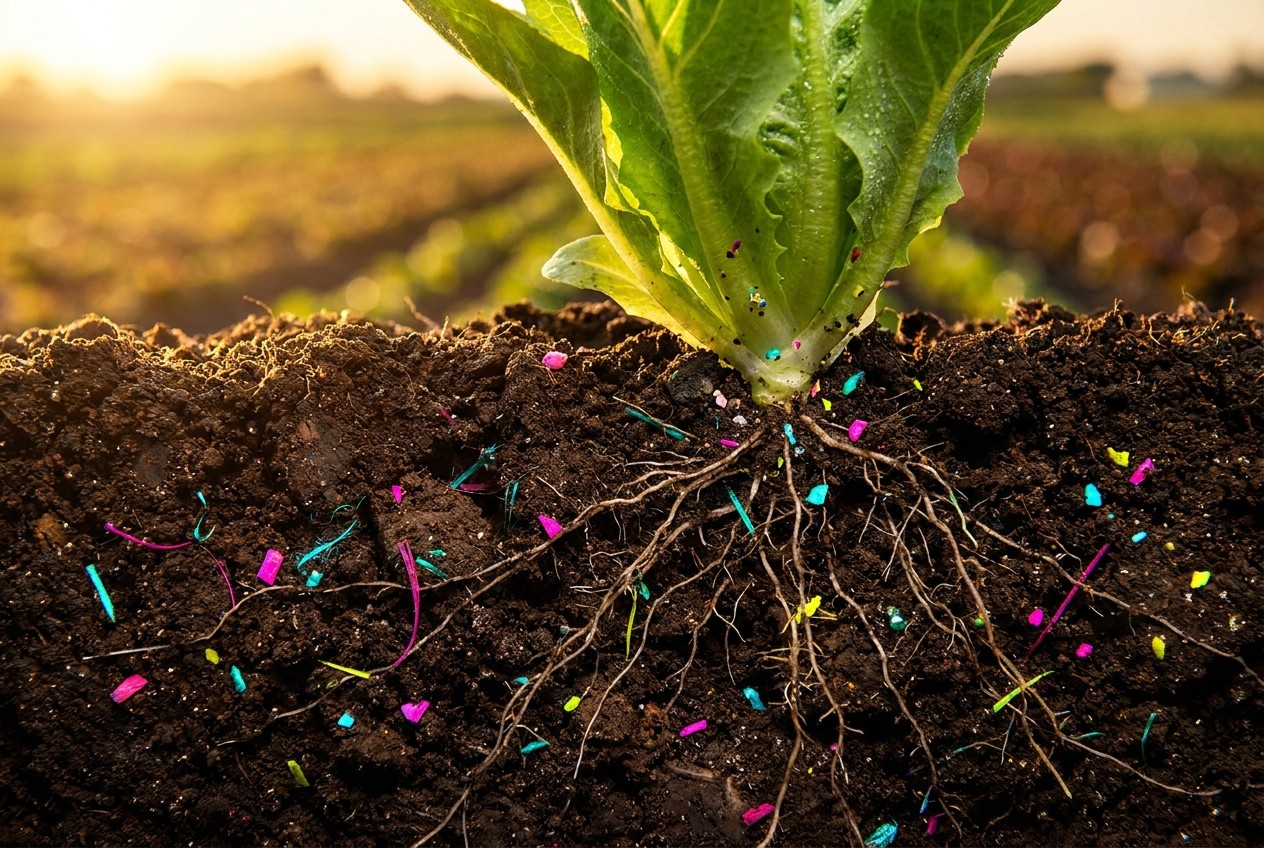
A newly reported study is raising fresh concern about microplastics in agricultural soils and the possibility that tiny plastic particles can move into food crops. The idea is simple but unsettling: plastic that breaks down in soil may not just stay there. Some of it may become part of the food system itself.
Farmers did not create the plastic age alone, of course. Modern agriculture relies on plastic for mulch films, drip lines, silage wrap, greenhouse covers, seedling trays, packaging, and countless other tools that make production more efficient. Plastic has helped conserve water, suppress weeds, and protect crops. But like a useful hired hand who never leaves, it can become a problem when fragments remain in the field year after year.
The concern is especially important for operations using plastic mulch, biosolids, contaminated compost, or irrigation water that may carry urban or industrial residues. Microplastics are small enough to move through soil pores, interact with microbes, and potentially affect soil structure and root environments. The science is still developing, but the direction of travel is clear: soil contamination is becoming a food safety and soil health issue, not just a waste management issue.
For growers, the practical response starts with source control. Remove plastic mulch as completely as possible, inspect compost suppliers, avoid degraded or brittle plastic products where alternatives exist, and keep irrigation and drainage systems maintained. Biodegradable mulches may help in some systems, but they also deserve careful scrutiny — not every product breaks down equally under real field conditions.
This is one of those slow-moving issues that can sneak up like weeds after a warm rain. Farmers are already being asked to care for carbon, water, biodiversity, and nutrient runoff. Now plastic stewardship may join the list. The sooner the industry builds cleaner materials and better recovery systems, the better chance we have of keeping the soil — and supper — as clean as possible.
Original source
Naturalnews.com - Read original articleMore from today's edition
The Little Goat That Kicked Open a Big Zoning Debate
A miniature goat in Wyoming has wandered straight into a constitutional lawsuit, raising bigger questions about how towns define pets, livestock, and fairness. For homesteaders and small-scale animal keepers, this is more than a quirky goat tale — it is a reminder that local ordinances can shape what is possible on even the tiniest patch of land.
Thai Highland Coffee Finds a Second Home in Tokyo
Coffee grown by Akha highland farmers in northern Thailand is gaining ground in Japan, with Akha Ama Coffee opening another Tokyo cafe. It is a small but telling example of how farmer-linked brands can turn sustainability, identity, and quality into market power.
Sustainable Food Systems Head to Campus
India’s university regulator has asked campuses to observe BRICS Sustainable Lifestyle Week, with sustainable food systems among the themes. Farmers may not feel this immediately, but today’s campus conversations often become tomorrow’s procurement rules, extension programs, and consumer expectations.
Before the App, Get the Map Right
Farm boundary data may not be glamorous, but it is the foundation under almost every serious agritech tool. Without accurate field maps, crop advice, insurance, credit, drone spraying, carbon programs, and satellite monitoring can all go crooked fast.