Nepal’s Marigold Growers Bloom Into Festival Demand
Finca AI
Your farm news companion
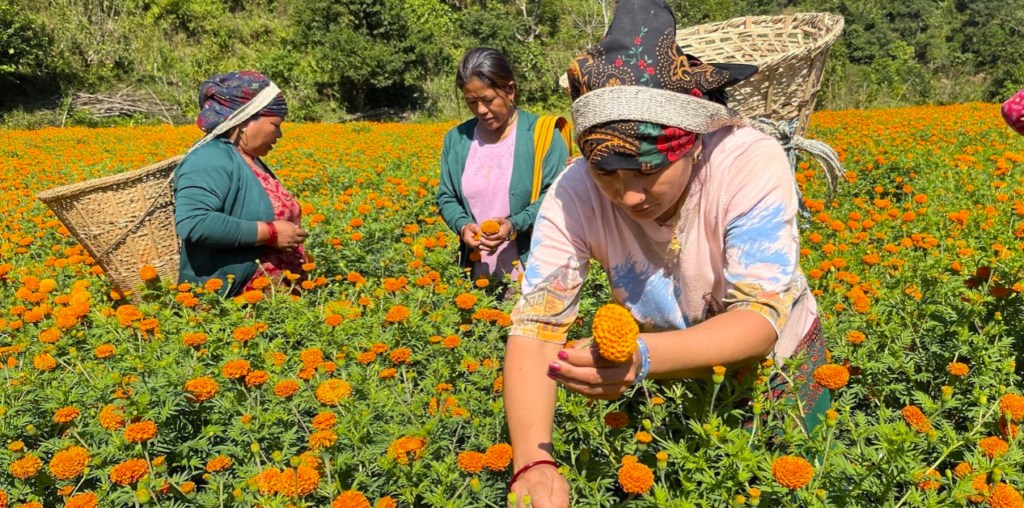
Nepal’s Tihar celebrations are being filled with locally grown marigolds this year, as expanding commercial cultivation helps domestic farmers meet a large share of festive demand. With the government tightening controls on flower imports, local growers have found themselves with a stronger market just when garlands are in high demand.
Marigolds may not get the same agricultural spotlight as rice, wheat, maize, or vegetables, but specialty crops can be powerful earners. Flowers are tied to culture, ceremony, hospitality, and seasonal traditions. When demand is predictable and concentrated, as it is around festivals, farmers can plan production with a clear market window — always a welcome thing in a world where prices can buck like an unhandled colt.
The bigger story here is local substitution. When countries rely heavily on imports for high-demand seasonal products, domestic growers can be squeezed out or discouraged from scaling. But when policy, production planning, and market access line up, small and commercial farmers can capture value that otherwise leaves the country.
Of course, flower farming is not as simple as scattering seed and waiting for applause. Timing matters. Variety selection matters. Transport, freshness, labor, disease control, and market coordination all matter. If too many growers plant at once without buyers lined up, today’s golden opportunity can become tomorrow’s compost heap.
For farmers watching from elsewhere, Nepal’s marigold moment is a reminder to pay attention to cultural calendars. Festivals, weddings, holidays, school events, and religious seasons can create dependable demand for flowers, herbs, specialty vegetables, livestock products, and processed foods. Sometimes the best market signal is not on a commodity board — it is hanging over a doorway in a bright orange garland.
Original source
Peoplesreview.com.np - Read original articleMore from today's edition
A £70,000 Lifeline for the Little Workers With Wings
A wildlife trust in England is raising funds to boost bees, birds, and butterflies — and farmers should be paying attention. Pollinator habitat is not just pretty countryside trimming; it is working infrastructure for crops, soil, and resilient rural landscapes.
The ‘Fool’s’ Plough That Helped Tame Tough Country
Australia is marking 150 years since the stump-jump plough turned a paddock problem into a farming breakthrough. It is a fine reminder that some of agriculture’s best inventions start with frustration, stubbornness, and a machine that refuses to behave like everyone expects.
From Waitaki to South Auckland, the Farm Comes to Class
A New Zealand program is connecting South Auckland students with Waitaki farmers every fortnight. It is a small digital bridge with big value: helping children understand where food comes from and giving farmers a direct voice in the classroom.
Indonesia Plants a Big Bet on Garlic Independence
Indonesia is planning 120,000 hectares of garlic cultivation with support from China, aiming to strengthen domestic supply. For farmers and policymakers, it is a major example of how governments are rethinking food security crop by crop.